
Tanzania-Mara Tarime PB



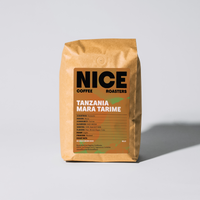

Tanzania-Mara Tarime PB
Country: Tanzania
Region: Mara
Province: Mara
District: Tarime
Community: Tarime
Altitude: 1600-1800MASL
Farm Area: 1-3 hectares on average per producer
Variety: N39, Kent(KT 423)
Process: Washed
Fermentation: Fermented overnight in cement tanks
Drying: 7-15 days in drying beds
Doug is so excited for this coffee from Red Fox he is typing in 3rd person. I haven't roasted a Tanzania in a decade but this one hit the spot and I had to buy it. So pumped for this delicate, rounded treat!
Those who have been in the industry for long enough might remember the popularity of Tanzania peaberry in second-wave coffee, but Tanzania Mara Tarime is fully of the present. Farmers throughout the country used to process with a style of depulping similar to a wet hulling, which lent both its own specific processing flavor and sometimes a tendency towards rapid aging that we see in other regions with similar processing styles.
Now, they’ve moved to an ultra-clean washed process. Recognizing the immense potential in this area, local sourcing organizations have invested heavily in agronomic training for the local producer communities.
The predominant variety in Mara is Kent, and much of what grows are hybrids or Bourbon mutations similar to those in Kenya—not varieties you see anywhere else.
Even though the profile is approachable, it's still distinct.
Producers here harvest carefully by hand. Ripe cherry is brought to the factory by smallholder farmers (1-3 hectares), where it is weighed and processed using the washed processing method. The coffee is pulped using a disc pulper with three sets of discs to remove the skin and fruit from the inner parchment layer that protects the green coffee bean.
Waste water used in processing is discarded in soaking pits, and is also recirculated for conservation. After pulping, the coffee is fermented overnight to break down the sugars, then cleaned and soaked for another 24 hours.
This process increases the proteins and amino acids, which in turn heightens the complexity of the acidity and clarity in the cup.
After soaking, the coffee is spread out on raised drying tables. Time on the drying tables depends on climate, ambient temperature and volume, and can take from 7 to 15 days in total.
Another special feature of sourcing in Northern Tanzania is that as local temperatures have risen over time with climate change, it's actually made it easier to dry coffee cleanly. While it's critical to address the negative climate change impacts we see in well-established specialty sourcing regions, we are also always looking for areas where the climate becomes more favorable for top-tier specialty coffee with time.
Due to a long relationship with our export partner, we have exclusivity on this washing station. They’re ready to work together to bring these coffees into our segment of the high-end specialty market where they can be properly appreciated